
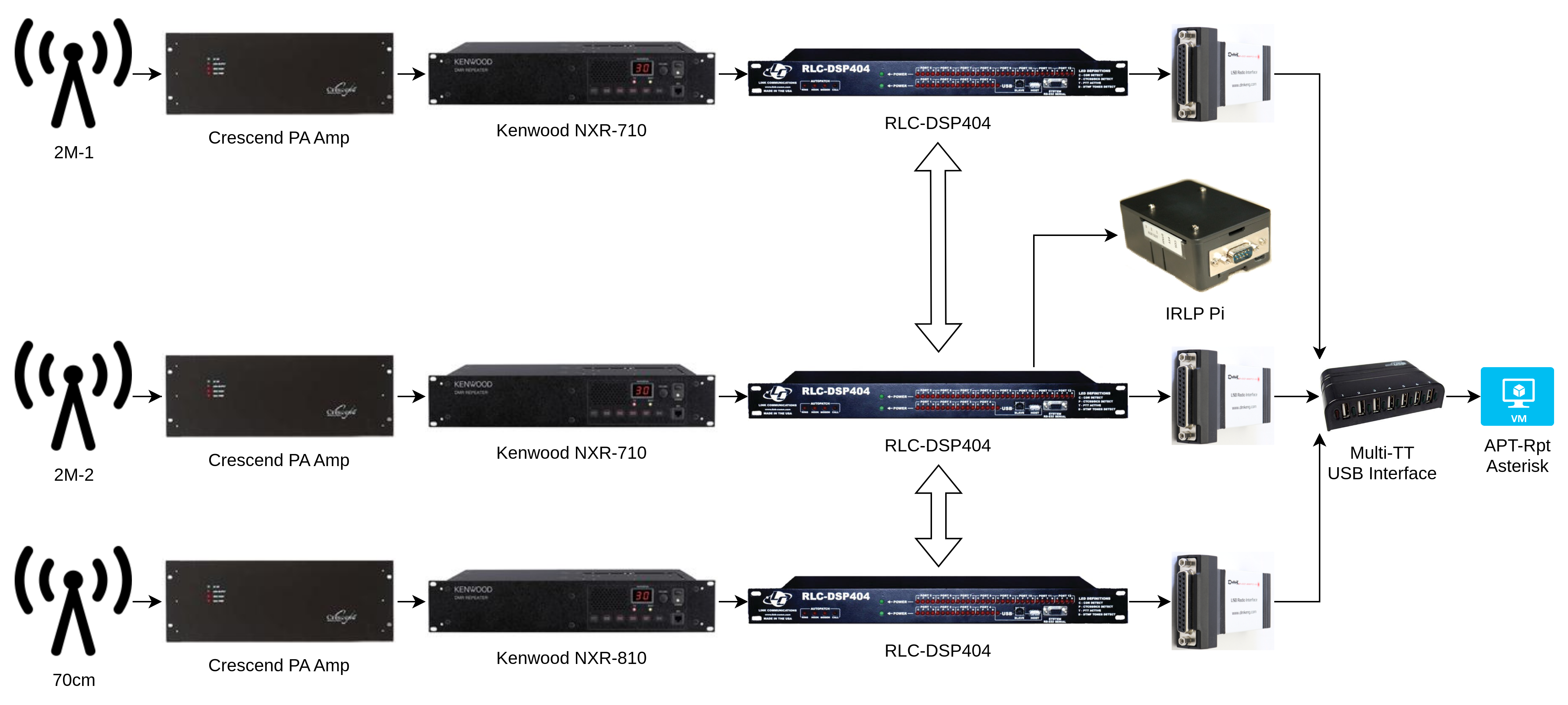
Multi-TT USB Interface
The DMK URIx devices are USB 1.1 sound cards. In order for USB 1.1 devices to talk to computers the data needs to be up converted using a Transaction Translator (TT) to USB 2.0. A Transaction Translator converts 1.1 packets to 2.0 packets in a serial queued fashion. Generally available USB 2.0 hubs contain 1 TT device, which for most applications is suitable as the latency induced when multiple devices attempt to talk at the same time goes unnoticeable. However, when translating audio packets, the latency induced when multiple audio devices are used at the same time can cause garbled audio.
It should be noted, USB ports on servers or computers generally connect to an internal hub, which also has a single TT device. As such, you can't assume that plugging audio cards directly into the server will solve audio issues. Additionally, USB 3.0 still uses a USB 2.0 data path for non 3.0 devices. As such, all the above details relating to translator still applies.
We use a special USB hub called a Multi-TT USB Hub. This hub provides a dedicated TT to each port, meaning each audio interface has it's own dedicated translator from 1.1 to 2.0 giving much clearer audio when multiple repeaters are active at the same time.
Virtualizing APP-RPT and Asterisk
All services at LSR is on a single Proxmox based virtualisation system.
USB audio traffic is heavily affected by jitter and latency in the USB subsystem. As such, the USB devices connected to asterisk are connected to a dedicated PCI USB card. This PCI USB card is configured as a PCI pass-through device into the virtual machine. This removes any USB latency that may be introduced by using USB pass-through. Additionally, devices remain configured with the same device ID. This means that when multiple devices are used, USBRadio finds the same device at the same devstr. This is no longer an issue once serial based card mapping is merged into SimpleUSB and USBRadio channels.